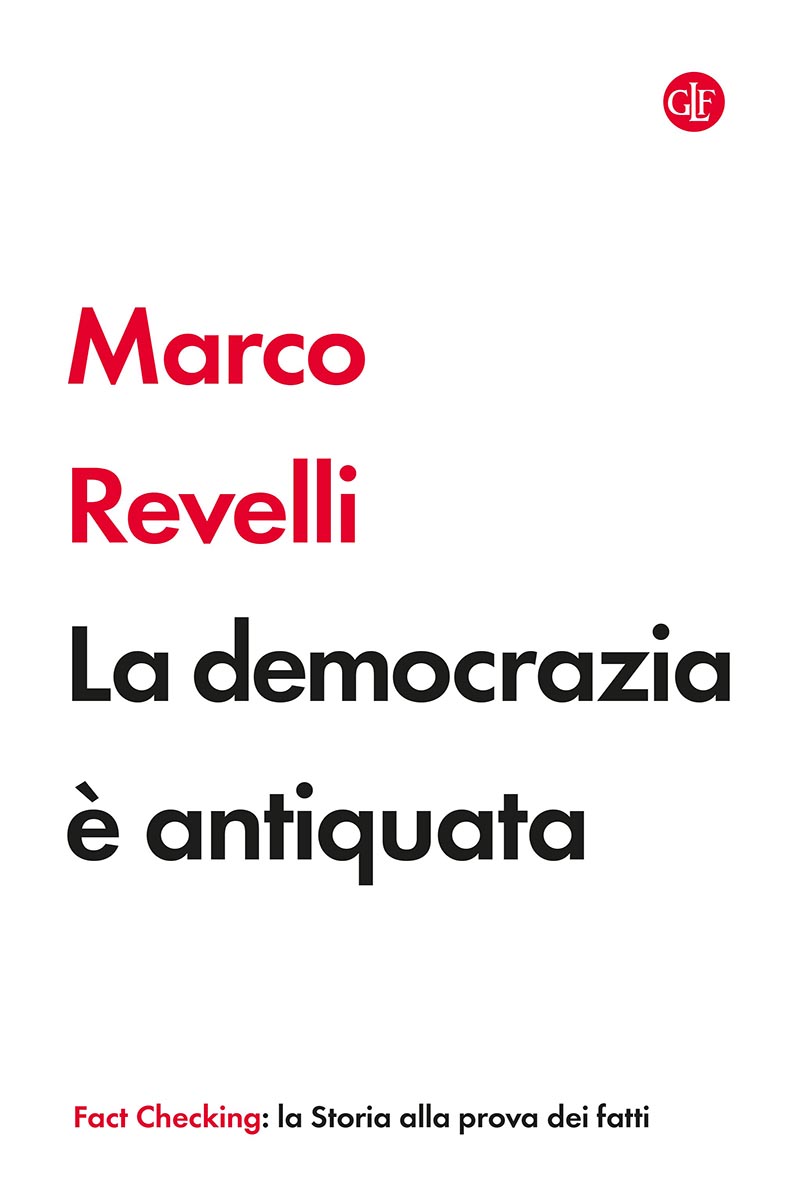
According to Peter Thiel and many other figures close to Donald Trump’s administration, “freedom and democracy are incompatible”; in fact, widespread participation tends to limit the efficiency of governments. In short, democracy is outdated, as evidenced by the growing spread of autocracies and authoritarian governments around the world. But is this really the case, or is it merely the agenda of oligarchs and mega-billionaires?
“Democracy is outdated”: this is the provocative premise from which Marco Revelli—one of the sharpest and most illuminating political theorists—sets out to determine whether democracy still has a future. A provocative statement that does not aim to declare its death, but rather to capture the distortion currently taking place.
Thus, the author rigorously dissects the forms of democratic decline: from “executive” democracy, which replaces Parliament with the efficiency of a leader, to “peopleless” democracy, where voter abstention becomes “negative participation”; from the “democracy of the few,” which is increasingly oligarchic, to the “democracy of money,” where the market governs every relationship; from the “democracy of disinformation,” distorted by the media and algorithms, to the “democracy of weapons” and “of secrecy.” Contemporary democracies no longer make promises; they merely present themselves as the “least worst” form of government. And the gap between ideals and reality is so vast that its founding principles—representation, participation, transparency, and information—have become unrecognizable.
But Revelli does not stop at this diagnosis: he points to the need for a “new beginning,” one that starts from the bottom up, in the conviction that only a radical critique of real democracy can save its future—a future yet to be built.