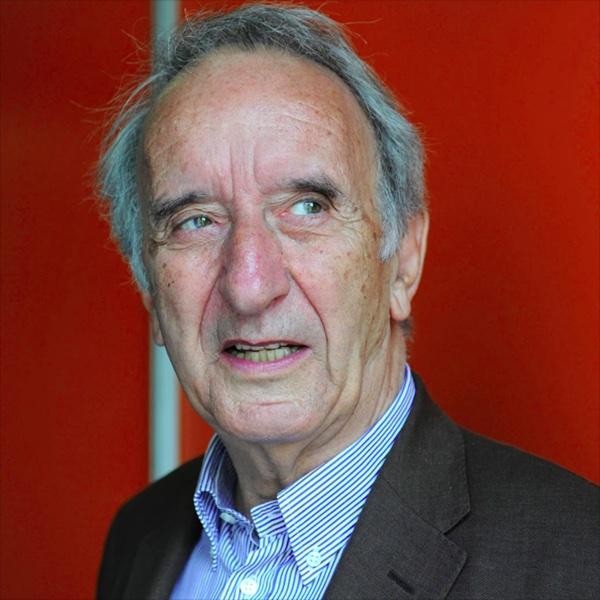
An Italian linguist, glottologist, and critic, he taught the history of the Italian language for thirty years at the University of Turin, where he is now professor emeritus. A member of the Accademia della Crusca and the Accademia dei Lincei, his extensive body of work has focused on both ancient and modern Italian: specific periods and aspects of 18th-century Italy; linguistic relations between Italy and Spain in the 16th and 17th centuries; 20th-century prose and poetry; literature and dialect; specialized registers of contemporary Italian; general linguistics; folk traditions; and ethnolinguistics. Among his works are: Rhythm and Melody in Italian Prose (1964), The Autonomy of the Signifier (1975), the essay on Beppe Fenoglio War and Asphodels (1984), Italian: Old and New (1988), The Forms of Distance (1989), The Names of the World. Saints, Demons, Goblins, and the Words That Have Disappeared (1995), A Journey in Search of the Vocabulary of the Now-Vanished Peasant Culture, Sicuterat (1999), In Praise of Slowness (2004), In Defense and for Love (2006),
And also: In the Folds of Words (2008), The Sea in a Funnel: Where Is the Italian Language Headed? (2010), My Italian Language: For the 150th Anniversary of National Unity (2011), Italian: How It Formed, How It Works, How It’s Used, How It Changes (with M. Pregliasco, 2014), The Footprints of the Word: From Sbarbaro to De Andrè: Testimonies on the Twentieth Century (2014), Italian in 100 Words (2015), The Italian That Remains: Words and Stories (2016), The Well and the Needle: On the Craft of Writing (2019).
With his simple style, brilliant exposition, and participation in a long-running Italian television program (Parola mia), he has made certain aspects of linguistics—often considered difficult and reserved for experts—popular and accessible to the general public.