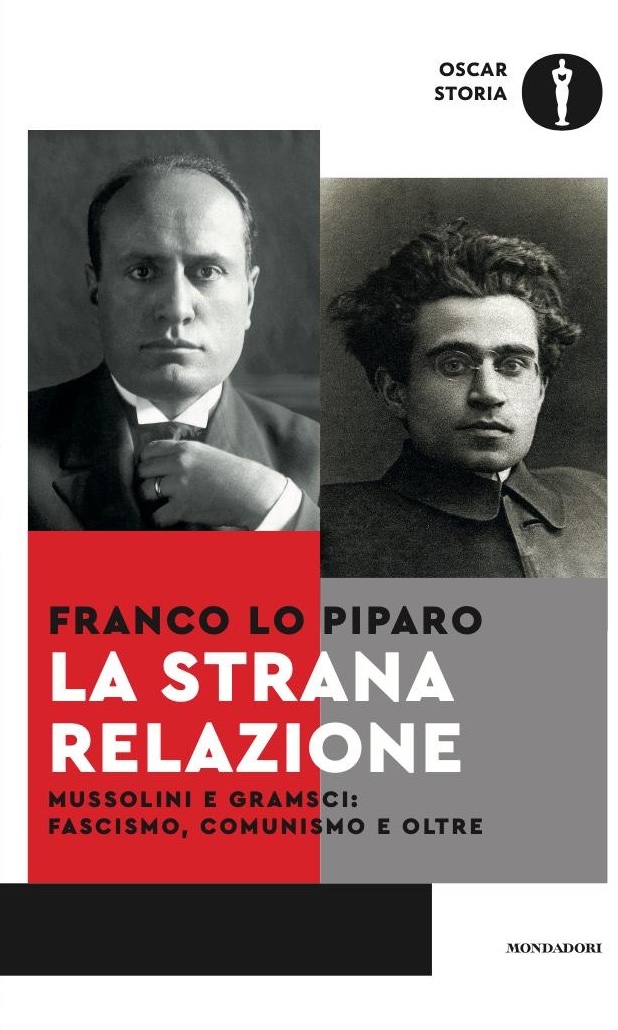
“What I am about to recount is a paradoxical story: the story of the protection Mussolini extended to the prisoner Gramsci, whom Mussolini himself had imprisoned. Compared to the prevailing narrative, it is an incredible and surprising story, but it is the one told by the documents I will cite.” True to his premise, the philosopher of language Franco Lo Piparo presents a series of official documents that tell the story of that remarkable political prisoner, who, from behind bars, bequeathed to posterity the extraordinary philosophical and political observations of the «Quaderni», a source of study throughout the world, including in post-Marxist circles. From internal documents urging that prison regulations be “interpreted with humanity” to the granting of privileges—following direct correspondence with “His Excellency the Head of Government”— —from a visit by a personal physician to the granting of conditional freedom to read (even the text “The Face of Bolshevism”!) and, above all, the freedom to write without restrictions—it is clear, writes Lo Piparo, that “all decisions concerning the prisoner Gramsci are authorized by the Ministry of the Interior, which is directly managed by the Head of Government.”
But “why did Mussolini protect the prisoner Gramsci, whom he had had arrested? There can only be one explanation: Mussolini knew that Gramsci was a dissident communist in crisis and that, as such, he was labeled a Trotskyist by the Soviet communists and considered an enemy. As a shrewd politician, he tried to exploit pro domo sua this dissent. He writes this clearly in the article he published on December 31, 1937, in *Il Popolo d’Italia*: “The communists have attempted to make him a sort of ‘saint’ of communism, a victim of fascism, whereas the reality is that Gramsci, after a brief period in prison, was granted permission to live in semi-private or completely private clinics. And he died of illness, not by gunshot, as happens to generals, diplomats, and Communist leaders in Russia when they dissent—even slightly—from Stalin, and as would have happened to Gramsci himself had he gone to Moscow.”
Another important piece of the puzzle: “Mussolini was the first reader of the Quaderni. He read them as they were written. This is not a supposition. He told this to the journalist and his biographer Yvon De Begnac: ‘I read the notebooks of those convicted by the Special Court.’” And since “Gramsci was not so naive as to be unaware—or at least not to suspect—that Mussolini was reading his notes,” it is as if a sort of “long-distance dialogue” had been unfolding for years between the two former socialists.
With a lively narrative style, combined with a meticulous analysis of mostly unpublished documents, Lo Piparo explores these two “parallel lives,” attempting to answer the many questions that remain open regarding the surprising, “intricate and intriguing liaison that bound Mussolini and Gramsci so deeply together.”